 “Sports is now no longer a hobby for rich guys” was the introductory quote in this week’s Fortune magazine profile of ex-Goldman Sachs dealmaker Gerry Cardinale. The day before, it was the turn of an earlier Gravitas name-drop and breakfast ‘buddy’, Todd Boehly, to appear in Forbes magazine. One owns AC Milan, the other Chelsea FC - both former investment bankers. Two articles in two days….hmmm. Curiosity tweaked, I did a bit more reading and my sense is that sport as a business has evolved significantly and is staring down the barrel of a seismic technology shift. Let’s start with evolution.
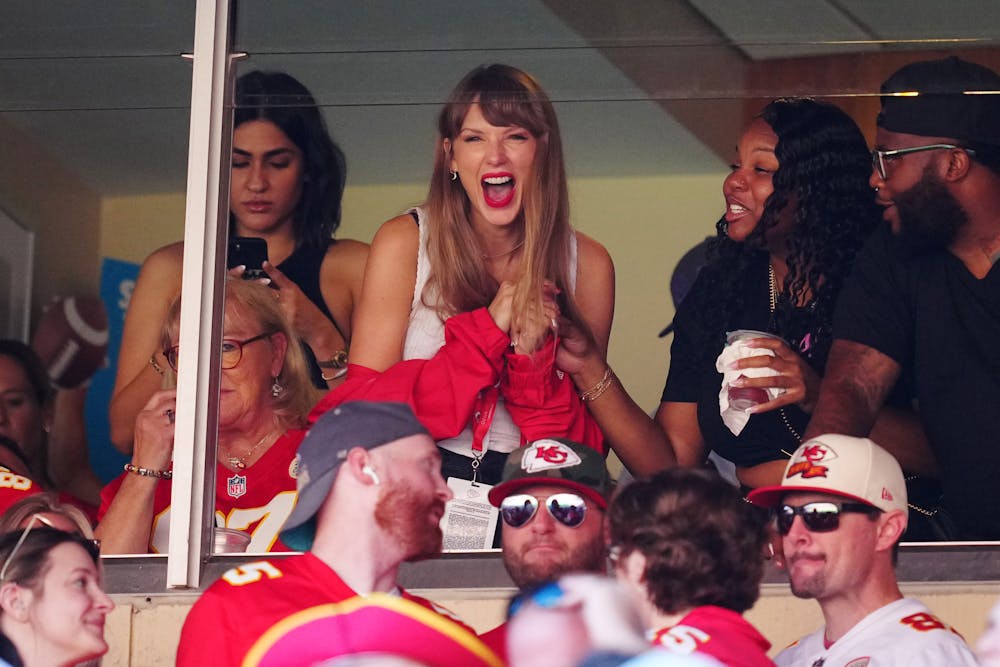
In a week when Taylor Swift becomes music’s first billionaire on personal performances and song-writing alone (Source: Forbes) we are reminded of the increasing value attributed to exclusive entertainment. Sport is a form of entertainment but the lines between showbiz and professional sport are beginning to blur. Swift’s attendance at her boyfriend’s Kansas City Chiefs games might have helped NFL TV viewing figures but that’s a superficial coincidence and misses the critical building blocks required to create wealth in sport these days. One could easily presume that the huge growth in value of sports franchises in recent years can be attributed to simply more (and wealthier) buyers than there are available suitable selling franchises. Yes, Saudi Arabia’s sovereign wealth fund(PGA golf, Newcastle Utd), the UK’s richest man Jim Ratcliffe of INEOS(Man Utd) and Wall Street’s finest (Boehly, Cardinale etc) are buying assets but, to use a property analogy, they are developers not real estate landlords/traders. These purchases are not about spotting undervalued assets to trade, but are all about building franchise value across the entire operation.
Gerry Cardinale’s RedBird has merged sport and entertainment in investments across football (AC Milan), media (LeBron James’s Spring Hill), Formula 1( Alpine Racing team with Ryan Reynolds) and stadium hospitality(Legends Hospitality) and he’s a believer in layering event expertise on top of sporting excellence:
“Sports is now no longer a hobby for rich guys” was the introductory quote in this week’s Fortune magazine profile of ex-Goldman Sachs dealmaker Gerry Cardinale. The day before, it was the turn of an earlier Gravitas name-drop and breakfast ‘buddy’, Todd Boehly, to appear in Forbes magazine. One owns AC Milan, the other Chelsea FC - both former investment bankers. Two articles in two days….hmmm. Curiosity tweaked, I did a bit more reading and my sense is that sport as a business has evolved significantly and is staring down the barrel of a seismic technology shift. Let’s start with evolution.
In a week when Taylor Swift becomes music’s first billionaire on personal performances and song-writing alone (Source: Forbes) we are reminded of the increasing value attributed to exclusive entertainment. Sport is a form of entertainment but the lines between showbiz and professional sport are beginning to blur. Swift’s attendance at her boyfriend’s Kansas City Chiefs games might have helped NFL TV viewing figures but that’s a superficial coincidence and misses the critical building blocks required to create wealth in sport these days. One could easily presume that the huge growth in value of sports franchises in recent years can be attributed to simply more (and wealthier) buyers than there are available suitable selling franchises. Yes, Saudi Arabia’s sovereign wealth fund(PGA golf, Newcastle Utd), the UK’s richest man Jim Ratcliffe of INEOS(Man Utd) and Wall Street’s finest (Boehly, Cardinale etc) are buying assets but, to use a property analogy, they are developers not real estate landlords/traders. These purchases are not about spotting undervalued assets to trade, but are all about building franchise value across the entire operation.
Gerry Cardinale’s RedBird has merged sport and entertainment in investments across football (AC Milan), media (LeBron James’s Spring Hill), Formula 1( Alpine Racing team with Ryan Reynolds) and stadium hospitality(Legends Hospitality) and he’s a believer in layering event expertise on top of sporting excellence:
“Sports is a multibillion-dollar live event entertainment business, and you have to bring relationships and multidisciplinary skill sets across a range of activities to be able to get these things done”The formula for modern sports ownership needs deep pockets and is focused on three key areas: Brand: The on-boarding of multi-year sponsors requires relationship and story-building skills. Infrastructure: Building world-class stadiums, training grounds and player rosters. Rights: Expertise and finance skills in the area of media rights are critical in modern sport. Clearly, investment in the product (arenas, players) builds the brand and leads to the showbiz discussions where audience and finance are the key leverage points. It is no accident that the owner (Boehly) of the LA Dodgers and Chelsea FC is also the owner of Hollywood’s Golden Globes awards event and Oscar-winning film production company A24. Boehly also was once a bond trader for Guggenheim which brings a world-class grasp of financing and risk. So, should we be surprised that it was he who structured the richest individual sports contract in history for the LA Dodgers' signing of baseball star, Shohei Ohtani? The deal is worth $700 million but Ohtani has agreed to be paid only $20 million of the package until 2034, then the balance over the next 9 years to 2043. Meanwhile, the Dodgers press conference introducing the deal and their new star drew an audience of 70 million and sold more jerseys in 48 hours than Lionel Messi did when going to Miami’s soccer franchise. Phasing payments over decades is only one side (liabilities) of the balance sheet evolution of sport. On the assets side of the franchise balance sheet, the LA Dodgers back in 2014 signed a 25-year broadcasting rights deal with Time Warner Cable for…..$8.4 billion. Now consider that Boehly and his Eldridge investment vehicle bought the Dodgers two years earlier for $2 billion. Smart business, but there’s another smart thing in the Eldridge investment approach. The sports and media portfolio of Eldridge holds more than 100 companies and includes Bruce Springsteen’s song catalogue as well as betting site, DraftKings. Yes, for those using Spark’s EIIS Private Portfolio service, the risk-sensible ‘portfolio approach’ is music to our ears. Now, let’s hit the senses with five more data points before we tackle the technology revolution coming.
- The average Gen Z consumer is spending $56 per month on streaming subscriptions (Spotify, Netflix etc)
- Netflix has done a $5 billion deal over 10 years for the live broadcasting rights to wrestling franchises, WWE and UFC, owned by the TKO Group.
- Investment firm, Sixth Street, is the first to launch a sports team from scratch – the 14th franchise, Bay FC, in the US national women’s soccer league.
- NBC’s streaming service, Peacock, paid $110 million in January to broadcast a single NFL play-off game between the Miami Dolphins and the Kansas City Chiefs. That works out at $1.8 million per minute of game action.
- Legal sports betting in the US reached $119 billion in 2023 (Source: American Gaming Association).
“No Netflix, no WAG nor streaming device can generate the social capital of watching sporting thrills and greatness in real time. So, for those with an entrepreneurial bent get thinking. There’s a strong possibility governments and private investors will sit up and take notice of the rich returns available in sport in a low returns world. Sport loves a crowd and one would be confident that equity crowdfunding will equally love a sports story. Tell it soon with the data and, as they say, if you’re not in you can’t win”